

Category: GDPR

Hiring a full-time data protection officer is a serious commitment. Salaries often run past £60,000 a year before you add recruitment, training and benefits. For most UK SMEs, that simply does not add up. This is where outsourced DPO services come in. They give you the same expertise on a flexible, affordable basis, without the overhead of a permanent hire.
In this guide we explain what outsourced DPO services UK businesses can access actually cover, how pricing works, and how to tell whether you legally need a DPO at all.
What does an outsourced DPO actually do?
A data protection officer oversees your organisation’s approach to data protection and makes sure you keep meeting your obligations under UK GDPR. When you outsource the role, an external specialist takes on those responsibilities on your behalf. In practice that means:
Acting as your named point of contact with the Information Commissioner’s Office (ICO)
Advising on day-to-day data protection questions
Reviewing privacy notices, policies and contracts
Supporting Data Protection Impact Assessments (DPIAs)
Helping you respond to Data Subject Access Requests (DSARs)
Guiding you through a data breach if one happens
The difference between an outsourced DPO and an occasional consultant is continuity. You get someone who knows your business and is on hand when you need them, rather than starting from scratch each time. You can see exactly what is included on our outsourced DPO services page.
Do you legally need a DPO?
Under UK GDPR, you must appoint a DPO if you are a public authority, if your core activities involve large-scale systematic monitoring of individuals, or if you process special category data on a large scale. Plenty of organisations sit near these thresholds and are unsure which side of the line they fall on.
The honest answer is that many SMEs do not legally require a DPO. But appointing one, even on an outsourced basis, sends a clear signal to customers, partners and investors that you take privacy seriously. It also means someone is genuinely responsible for compliance, rather than it being everyone’s job and therefore nobody’s.
How much do outsourced DPO services cost?
This is the question most businesses want answered first. The honest answer is that it depends on your size, sector and risk level. A small, low-risk business needs far less support than a regulated firm handling sensitive data.
At Athlex our outsourced DPO packages start at £350 per month plus VAT for light ongoing support, rising to £950 per month for high-risk or regulated businesses needing more hours and unlimited contract reviews within their included time. Every plan includes a named DPO registered with the ICO, email and phone support, GDPR documentation review and an annual data protection audit. Sign up for twelve months and you get ten per cent off.
Compare that to a full-time hire and the value becomes obvious. You get specialist knowledge, ICO liaison and ongoing support for a predictable monthly fee, without recruitment costs or the risk of your only data protection expert handing in their notice.
What you gain beyond compliance
Good outsourced DPO services do more than keep you on the right side of the law. They reduce risk by spotting weaknesses before they become breaches. They save time, because your team is not stuck trying to interpret guidance they were never trained to read. And they support growth, because being able to demonstrate strong data protection helps you win tenders and reassure investors.
Independence matters too. An external DPO can challenge existing practices and recommend changes without worrying about internal politics. That objectivity is genuinely valuable when you are being audited or responding to a regulator.
How to choose the right provider
Look for a provider with experience in your sector, clear and upfront pricing, and fast, responsive support. Avoid anyone promising instant compliance or guaranteed breach prevention, because honest providers know data protection is an ongoing effort, not a one-off fix.
Ready to take the next step?
If you are weighing up whether outsourced DPO services are right for your business, the simplest way forward is a quick conversation. Get in touch with Athlex and we will help you work out exactly what level of support you need, with no jargon and no pressure. Protect your business, build customer trust and get back to focusing on growth.

Hiring a full-time data protection officer feels like overkill for many growing UK businesses. The salary alone often sits north of £60,000, and that is before recruitment fees, training, and the awkward realisation that you might not have 40 hours of DPO work a week to keep them busy.
External DPO services solve that problem. You get the expertise, the regulatory contact point, and the accountability of a qualified data protection officer, without the overhead of a permanent hire. But how do you know when outsourcing makes sense, and what should you expect from a good provider?
What Are External DPO Services?
External DPO services give you access to a named, qualified data protection officer who works for your business on a flexible basis. They are not an employee. They sit outside your organisation, which gives them the independence that GDPR Article 38 specifically calls for.
A good external DPO will:
Act as your named point of contact with the ICO
Advise on GDPR compliance and data protection law
Monitor your internal compliance and conduct audits
Support Data Protection Impact Assessments (DPIAs)
Handle or advise on Data Subject Access Requests
Train your staff on data protection responsibilities
Help you respond quickly when something goes wrong
When Should You Consider External DPO Services?
There are two situations to think about: legal requirement and commercial sensibility.
You Are Legally Required to Appoint a DPO
Under UK GDPR, you must appoint a DPO if you are a public authority, if your core activities involve regular and systematic monitoring of people on a large scale, or if you process special category data on a large scale. If any of these apply, you cannot ignore the obligation, and outsourcing is often the most practical route.
You Are Not Required, But It Makes Business Sense
Many SMEs do not legally need a DPO, but appointing one anyway is a smart move. Common triggers include:
A larger client or investor asking who your DPO is during due diligence
Expansion into a regulated sector such as finance, health or education
A recent data breach, near miss, or ICO complaint
Launching a product that processes more personal data than before
Adopting AI tools that introduce new privacy risks
If any of these sound familiar, the cost of an external DPO is small compared to the cost of getting it wrong.
The Benefits of Going External
Cost Control
An external DPO typically costs a fraction of a permanent hire. You only pay for what you need, and you can scale up or down as the business changes.
Independence
Internal DPOs can struggle to challenge senior leaders who control their pay and promotion. An external DPO has no such conflict and can give you straight, defensible advice even when it is uncomfortable.
Breadth of Experience
A good external DPO has seen dozens of businesses across different sectors. They bring pattern recognition that an internal hire takes years to build, which means faster diagnoses and fewer expensive mistakes.
Continuity
When an internal DPO resigns, you lose institutional knowledge overnight. An external provider gives you continuity through a team rather than a single person.
What to Look For in an External DPO Provider
Not all providers are equal. Before signing anything, check the following.
Qualifications and Experience
Ask who your named DPO will be, what qualifications they hold, and what sectors they have worked in. If you cannot get a clear answer, walk away.
Scope and Service Levels
Make sure the contract spells out response times, included hours, what happens in a breach, and how additional work is billed. Vague scope leads to vague support.
Independence and Conflicts
Your DPO should be free of conflicts of interest. If the same provider is selling you the software they are then auditing, ask hard questions.
Practical Communication
The best DPOs translate regulation into plain English. If their proposal reads like a legal textbook, your staff will switch off long before anything useful happens.
How External DPO Services Work in Practice
At Athlex, our outsourced DPO service starts with a discovery call to understand your business, your data, and your risks. From there, we agree a package that fits your size and sector, from light-touch oversight for small teams to full DPO cover for higher-risk operations.
You get a named DPO, email and phone support, document reviews, an annual data protection audit, and breach response support. We track our hours, so you can see exactly how your support time is being used.
Common Misconceptions About Outsourcing
‘We are too small.’ If you process personal data, GDPR applies. Size does not exempt you, but it does change what ‘appropriate’ looks like.
‘Our solicitor handles it.’ Legal advice and data protection oversight are different jobs. A solicitor will not monitor your day-to-day compliance or train your staff.
‘Our IT provider has us covered.’ IT security is part of data protection, not the whole of it. Policies, contracts, rights requests, and staff behaviour all sit outside the IT remit.
Final Thoughts
External DPO services let UK businesses access serious data protection expertise without the cost or commitment of a full-time hire. For most SMEs, that combination of flexibility, independence and depth is exactly what UK GDPR was designed to encourage.
If you are weighing up whether to bring DPO support in-house or outsource, book a free consultation with Athlex. We will help you work out whether you need a DPO at all, and if so, what level of support actually fits your business.

Most data breaches do not start with a hacker in a hoodie. They start with a tired employee, a misdirected email, or a confident click on a phishing link. That is why GDPR training is one of the highest-return investments a UK business can make. It costs less than a single ICO fine and prevents the everyday mistakes that lead to most reportable incidents.
Yet plenty of SMEs still treat training as a tick-box exercise. A 30-minute video at induction, a quiz nobody reads, and a certificate filed in a folder nobody opens. If that sounds familiar, this guide is for you.
Why GDPR Training Matters More Than You Think
Under UK GDPR, organisations must put in place appropriate technical and organisational measures to protect personal data. Training sits squarely in the organisational column. If a breach happens and you cannot show that staff were trained to handle data properly, the ICO will treat that as an accountability failure, not just bad luck.
The practical case is even stronger. Research consistently shows that human error causes the majority of personal data breaches. Misaddressed emails, weak passwords, oversharing on chat tools, and falling for phishing emails are all preventable with the right awareness.
Who Needs GDPR Training?
Everyone who touches personal data needs some form of training. That is wider than people think. It includes:
Customer-facing teams handling enquiries, bookings or complaints
Sales and marketing staff using CRMs and email tools
HR teams processing applications, payroll and references
Finance handling invoices, cards and supplier details
IT and operations managing systems and access
Directors and senior leaders making decisions about data
For higher-risk roles such as HR or marketing, generic training is not enough. You need role-specific modules that reflect the actual systems and decisions those people deal with day to day.
What Good GDPR Training Actually Covers
A strong training programme is short, specific and repeated. The goal is not to turn your team into lawyers. It is to give them enough understanding to make good decisions and escalate the right things.
The Basics of UK GDPR
Staff should understand what personal data is, what the lawful bases are, and what individual rights look like in practice. They do not need to memorise Article numbers. They need to recognise a DSAR when it lands in their inbox.
Practical Data Handling
This is where most breaches are prevented. Cover the boring but essential habits: double-checking email recipients, using BCC, locking screens, using secure file sharing, and never sending personal data to personal email accounts.
Recognising and Reporting Incidents
Every employee should know what a data breach looks like and exactly who to tell. The UK GDPR gives you 72 hours to report serious breaches to the ICO. That clock starts when the organisation becomes aware, not when the DPO is told the following week.
Phishing and Social Engineering
Real examples beat theory. Show staff genuine phishing emails (with the dodgy bits highlighted) and run simulated tests. Praise people who report suspicious messages, even when they turn out to be safe.
Marketing, Cookies and Consent
Marketing teams need extra detail on PECR, valid consent, and the rules for B2B and B2C outreach. This is also where the Data (Use and Access) Act 2025 changes are most relevant.
How Often Should You Train Staff?
Once is not enough. A sensible cadence looks like this:
Induction training for every new starter, before they touch personal data
An annual refresher for all staff
Role-specific top-ups for HR, marketing, sales and IT
Short updates whenever the law, your systems or your suppliers change
Micro-learning works well. Ten focused minutes once a quarter beats a two-hour annual marathon nobody remembers.
Common Training Mistakes UK SMEs Make
A few traps to avoid:
Using generic, off-the-shelf content that ignores your actual tools and workflows
Forgetting contractors, freelancers and temporary staff
Treating training as a one-off project rather than an ongoing programme
Not recording who completed training and when
Failing to test whether staff actually understood the content
If an auditor or the ICO asks for evidence of your training programme, you need more than a vague claim that ‘everyone was sent the deck’.
How to Build a Training Programme Without Burning Out Your Team
Start small. Map the roles that touch personal data, identify the top three risks for each one, and build short modules around those. Use real scenarios from your business, not stock examples about fictional hospitals.
Keep records of attendance, scores and refresher dates. This evidence is gold during a data protection audit or after an incident.
If you do not have the internal expertise to build this from scratch, an outsourced DPO can design and deliver a tailored programme that fits your sector and risk profile, then keep it updated as the law changes.
Final Thoughts
GDPR training is not about scaring your team into paralysis. It is about giving them clear rules, sensible habits, and the confidence to flag problems early. Done well, it reduces breaches, supports compliance, and frees up senior time that would otherwise be spent putting out fires.
If you want help building a practical, role-based GDPR training programme that staff actually engage with, get in touch with Athlex. We will tailor the content to your tools, your risks and your team.
What is a Data Subject Access Request (DSAR)?

A Data Subject Access Request, or DSAR, is a formal request from an individual asking to see the personal data an organisation holds about them. Under UK GDPR, individuals have the right to access their data, understand how it’s being used, and receive a copy – usually free of charge.
DSARs can come from customers, employees, suppliers, or anyone whose data you process. They might arrive by email, letter, or even verbally. Regardless of how they’re submitted, you have a legal obligation to respond within one month (extendable to three months in complex cases, with justification).
For many UK businesses, DSARs are rare. But when one lands in your inbox, it can feel like a legal grenade. You need to act fast, gather the right data, redact sensitive information, and respond in a way that’s both compliant and professional. Get it wrong, and you risk ICO fines, legal action, or reputational damage.
Why DSARs Matter for UK Businesses
DSARs are one of the most common ways individuals exercise their data protection rights. The ICO takes them seriously, and so should you. A poorly handled DSAR can trigger a complaint to the regulator, especially if you miss the deadline, refuse without valid grounds, or provide incomplete information.
But DSARs aren’t just a compliance risk – they’re also an opportunity. Handling them well demonstrates transparency, builds trust, and shows you take privacy seriously. On the flip side, ignoring or mishandling a DSAR can escalate into a full ICO investigation, especially if the requester is persistent or legally represented.
Common DSAR scenarios include:
Former employees requesting copies of emails, performance reviews, or HR records
Customers asking what data you hold after a data breach or privacy concern
Individuals involved in disputes or legal proceedings seeking evidence
Competitors or journalists using DSARs to gather intelligence (yes, this happens)
The DSAR Process: Step-by-Step
Handling a DSAR efficiently requires a clear process. Here’s how to do it right:
Step 1: Verify the Identity of the Requester
Before handing over any data, you need to confirm the requester’s identity. This protects both you and the individual. Ask for proof of identity – a passport, driving licence, or utility bill usually suffices. If the request is submitted by a third party (such as a solicitor), ask for written authorisation from the individual.
Step 2: Clarify the Scope of the Request
Some DSARs are vague: “Send me everything you have on me.” Others are laser-focused: “I want copies of all emails between me and John Smith from January to March 2025.” If the request is unclear, contact the requester and ask them to narrow it down. This saves you time and ensures you provide what they actually want.
Step 3: Search for the Data
This is where it gets messy. You need to search all systems where the individual’s data might be stored: emails, CRM platforms, HR systems, cloud storage, paper files, and even backup servers. Don’t forget less obvious places like Slack messages, WhatsApp groups, or handwritten notes.
For complex requests, consider using e-discovery tools or working with an IT specialist to ensure you don’t miss anything.
Step 4: Redact Third-Party Data
You can only disclose the requester’s personal data, not someone else’s. If an email thread includes other people’s names, opinions, or personal details, you’ll need to redact them. This is time-consuming but essential. The ICO provides guidance on redaction and exemptions to help you get it right.
Step 5: Respond Within the Deadline
You have one month from receipt of the request to respond. If you need more time (up to three months), you must tell the requester within the first month and explain why. Missing the deadline without good reason is a red flag for the ICO.
Your response should include:
A copy of the personal data you hold
Information about how you use it and who you share it with
Details of how long you keep it
Information about the individual’s other rights (e.g. to rectify or erase data)
Common DSAR Challenges and How to Overcome Them
Challenge 1: Excessive or Vexatious Requests
Sometimes, individuals submit repeated or clearly unreasonable DSARs. UK GDPR allows you to refuse these, but you need to document your reasons carefully. If in doubt, seek legal or DPO advice before refusing.
Challenge 2: Data Spread Across Multiple Systems
If your data is scattered across different platforms, gathering it all can be a nightmare. This is why having a clear data inventory (or Record of Processing Activities) is so important. It tells you where to look.
Challenge 3: Balancing Transparency with Confidentiality
You might hold data that reveals confidential business information, trade secrets, or legal advice. In some cases, you can withhold this under exemptions, but you must justify your decision and inform the requester.
How Athlex DSAR Services Can Help
Handling DSARs in-house can be stressful, especially if you’re dealing with your first one or a particularly complex request. At Athlex, our DSAR services provide expert support to help you respond quickly, compliantly, and confidently, whether you need one-off help or ongoing outsourced DPO support.
Our DSAR services include:
Advice on verifying identity and scoping the request
Guidance on searching for and gathering data
Support with redaction and exemptions
Review of your draft response before you send it
Ongoing support if the requester challenges your response
We also offer DSAR support as part of our Outsourced DPO packages, so you have expert help on hand whenever you need it.
Whether you’re facing your first DSAR or dealing with a tricky repeat requester, we’ll help you handle it efficiently and avoid costly mistakes.
Conclusion
Data Subject Access Requests are a fact of life under UK GDPR. They can be time-consuming and stressful, but with the right process and expert support, you can handle them smoothly and stay compliant.
If you’ve received a DSAR and need help, or if you want to put a robust process in place before the next one arrives, get in touch with Athlex today. We’ll guide you through every step, so you can respond with confidence.
What is a Data Protection Impact Assessment (or Privacy Impact Assessment)?

A Data Protection Impact Assessment (DPIA) under UK GDPR, also known as a Privacy Impact Assessment (PIA), is a structured process that helps organisations identify and minimise the data protection risks of a project or system. A privacy impact assessment is one of the most useful tools for proving accountability. If you’re launching a new service, implementing new technology, or changing how you handle personal data, a DPIA helps you spot potential privacy problems before they become compliance headaches or data breaches.
Think of it as a health check for your data processing activities. It forces you to ask the right questions: What data are we collecting? Why do we need it? Who has access? What could go wrong? And most importantly, how do we fix it?
Under UK GDPR, a DPIA is mandatory in certain high-risk situations. But even when it’s not legally required, it’s often the smartest move you can make. It demonstrates accountability, reduces the risk of fines, and shows customers you take their privacy seriously.
When is a Data Protection Impact Assessment Required?
You must conduct a DPIA when your processing is likely to result in a high risk to individuals’ rights and freedoms. The ICO provides clear guidance on when a DPIA is necessary, but here are the most common scenarios:
Large-Scale Processing of Sensitive Data
If you’re processing special category data (health records, biometric data, criminal convictions) on a large scale, a DPIA is required. For example, a healthcare provider rolling out a new patient management system would need to complete a DPIA before going live.
Systematic Monitoring
Any systematic and extensive monitoring of publicly accessible areas triggers the DPIA requirement. CCTV networks, location tracking apps, and workplace monitoring systems all fall into this category.
Automated Decision-Making
If you’re using algorithms or AI to make decisions that significantly affect individuals – such as credit scoring, recruitment screening, or fraud detection – you need a DPIA. This includes profiling activities that could lead to discrimination or unfair treatment.
New Technology Deployments
Rolling out new technology that processes personal data in a novel way? A DPIA is your friend. Whether it’s a new CRM platform, marketing automation tool, or AI-powered chatbot, assessing the privacy risks upfront saves trouble later.
For more detailed guidance on when a DPIA is required, visit the ICO’s DPIA guidance page. https://ico.org.uk/for-organisations/uk-gdpr-guidance-and-resources/accountability-and-governance/data-protection-impact-assessments-dpias/
How to Conduct a Privacy Impact Assessment
A good DPIA follows a clear structure. You don’t need a law degree to complete one, but you do need to be thorough and honest about the risks.
Step 1: Describe the Processing
Start by documenting what you’re planning to do. What personal data will you collect? Where will it come from? Who will have access? How long will you keep it? Be specific. Vague descriptions lead to vague risk assessments.
Step 2: Identify the Necessity and Proportionality
Ask yourself: do we really need all this data? Is there a less intrusive way to achieve the same goal? This is where many organisations trip up. Just because you can collect data doesn’t mean you should.
Step 3: Identify and Assess Risks
This is the heart of the DPIA. What could go wrong? Could the data be accessed by unauthorised people? Could it be lost or stolen? Could individuals be harmed if the data is misused? Rate each risk by likelihood and severity.
Common risks include:
Unauthorised access or data breaches
Function creep (using data for purposes beyond the original intent)
Discrimination or unfair treatment from automated decisions
Reputational damage to individuals
Loss of trust in your organisation
Step 4: Identify Measures to Mitigate Risks
For each risk, document how you’ll reduce it. This might include encryption, access controls, staff training, regular audits, or anonymisation techniques. The goal is to bring risks down to an acceptable level.
Step 5: Sign Off and Review
Your DPIA should be approved by senior management and, if you have one, your Data Protection Officer. It’s not a one-and-done document – you should review it regularly, especially if the processing changes or new risks emerge.
For a step-by-step template and practical examples, the ICO offers a free DPIA template that UK businesses can adapt, or we can assist you with a custom DPIA suited to your business..
Common Mistakes to Avoid
Many organisations treat DPIAs as a box-ticking exercise. They rush through the process, copy-paste generic risk assessments, and file the document away without acting on it. This is worse than not doing a DPIA at all, because it creates a false sense of security.
Here are the most common mistakes:
Starting too late: A DPIA should be done at the design stage, not after you’ve already built the system.
Ignoring stakeholder input: Consult the people who will be affected. Their insights often reveal risks you hadn’t considered.
Underestimating risks: If something feels risky, it probably is. Don’t downplay risks to make the project look safer.
Failing to act on findings: A DPIA is only useful if you implement the mitigations you identify. If high risks remain, you may need to consult the ICO before proceeding.
How Athlex Can Help
Conducting a privacy impact assessment can feel overwhelming, especially if it’s your first time. At Athlex, we provide expert support to help you complete a thorough, compliant DPIA without the stress.
Our Privacy Impact Assessment service includes:
Guidance on scoping and structuring your DPIA
Risk identification and mitigation advice
Review and feedback on your draft DPIA
Support with ICO consultation if required
We also offer this as part of our Outsourced DPO packages, so you have ongoing support for all your data protection needs.
Whether you’re launching a new product, adopting AI tools, or rolling out a new HR system, we’ll help you get your DPIA right the first time.
Conclusion
A Privacy Impact Assessment isn’t just a compliance requirement – it’s a practical tool that helps you build better, safer systems. By identifying risks early and taking steps to mitigate them, you protect your customers, your reputation, and your business.
If you’re unsure whether you need a DPIA, or you’d like expert help completing one, get in touch with Athlex today. We make data protection simple, so you can focus on growing your business with confidence.
AI is changing how people ask questions

The ICO has published new guidance on AI-generated FOI requests to help public authorities deal with Freedom of Information requests involving artificial intelligence.
The guidance explains that people now use AI tools to help them make information requests. As a result, some requests may look longer, more formal or more complex than before. Some may also rely on wording that does not quite fit the law.
Why this matters beyond FOI
At first, this may sound like a public sector issue.
However, private businesses should still pay attention.
If people can use AI tools to write Freedom of Information requests, they can also use them to write subject access requests, complaints, contract challenges and customer queries.
Therefore, this is not just a story about FOI.
It gives businesses a useful warning about what comes next.
People now have tools that help them ask formal questions quickly. Sometimes those questions will make sense. Sometimes they will not. Either way, businesses need to know how to respond.
Why this matters for UK businesses
Freedom of Information law applies to public authorities. Therefore, most private businesses do not need to respond to FOI requests.
However, private businesses do need to deal with data protection rights under the UK GDPR.
For example, individuals may ask for a copy of their personal data through a subject access request. Athlex has a helpful DSAR guide for SMEs that explains what these requests involve and why they can become difficult to manage.
Individuals may also ask how your business uses, shares, stores or deletes their data.
AI can make requests look more formal
Because of AI tools, those requests may now look more detailed.
They may also sound more legal than before.
That does not mean the request is correct. However, your business still needs a clear process for handling it.
In practice, your team should know:
- who deals with requests;
- how they track deadlines;
- where they can find personal data;
- when they need legal input;
- how they check whether AI tools play a role;
- how they respond clearly and fairly.
Without that structure, even a simple request can create stress.
Once stress enters the process, mistakes become more likely. Because apparently one awkward email can still ruin everyone’s afternoon.
The real risk is not the AI-generated request
AI-generated requests may feel frustrating. They may run too long. They may quote the wrong law. They may also ask for information the person cannot receive.
However, the request itself is not the main risk.
The bigger risk appears when your business cannot explain what it does with personal data.
Requests test your data protection controls
For example, a business may struggle if it cannot explain:
- what personal data it holds;
- why it holds that data;
- where teams keep it;
- who can access it;
- which suppliers process it;
- whether AI tools use it;
- how long the business keeps it;
- whether the privacy notice matches reality.
As a result, a request can quickly become more than an admin task.
It can test your data protection controls.
It can also show whether your policies match what actually happens inside the business.
If you need practical support reviewing your current position, Athlex’s GDPR consultancy services can help you assess gaps and decide what needs attention first.
AI makes transparency more important
Many businesses already use AI in everyday ways.
For example, they may use AI to:
- summarise customer emails;
- support recruitment;
- review complaints;
- analyse customer behaviour;
- support fraud checks;
- write internal notes;
- power website chatbots;
- prioritise sales leads.
Some of these uses may feel low risk.
However, personal data changes the position.
If an AI tool uses personal data, the business needs to understand what happens to that data.
That means asking clear questions.
What data does the tool use? Why does the business use it? Has the business told the person? Does a supplier help process the data? Can the supplier use the data to train the tool? Could the output affect someone?
These are not abstract legal questions.
They are practical business questions.
Increasingly, customers, staff and regulators may expect clear answers.
Automated decision-making is where AI gets serious
Some AI tools simply help teams work faster. Others go further. They may help decide who gets an interview, whether a transaction looks suspicious, what price someone is offered, or whether a customer should receive a service. At that point, AI is no longer just a helpful tool in the background. It may be influencing decisions that affect real people.
That is why automated decision-making needs special care.
The Data Use and Access Act 2025 has changed parts of the UK’s data protection rules. In simple terms, it gives organisations more flexibility to use automated systems for significant decisions. However, the ICO is clear that this flexibility depends on appropriate safeguards still being in place.
So, this is not a free pass to hand decisions to AI and walk away whistling. Where an automated decision has a legal or similarly significant effect on someone, businesses still need to think carefully about fairness, transparency and challenge. For example, people may need to be told about the decision, given a chance to challenge it, allowed to make their views known and given access to meaningful human involvement.
This matters for businesses using AI in areas such as:
* recruitment;
* fraud checks;
* lending or affordability decisions;
* customer risk scoring;
* access to services;
* pricing;
* complaints handling.
The key question is not simply:
Are we using AI?
The better question is:
Could this AI use affect someone in a meaningful way?
If the answer is yes, the business needs to slow down and check the rules before the system goes live.
That means understanding what the AI tool does, what data it uses, how decisions are made, what role humans play and how people can challenge the outcome. Because “the system recommended it” is not a data protection strategy.
It is a sentence that usually arrives shortly before someone asks for evidence. In short, AI can support better decisions. However, businesses still need to understand how those decisions are made and whether people have proper safeguards.
A human review also needs to be real. If someone simply accepts the AI output without thinking, that is not meaningful oversight. It is just automation wearing a human hat, which is less comforting than some people seem to think.
What businesses should do now
The answer is not to panic.
It is also not to ban every AI tool and pretend everyone will go back to manual spreadsheets.
Instead, businesses should take practical steps.
1. Map where AI is being used
First, find out where AI is being used across the business.
This should include obvious tools, such as chatbots and AI platforms. However, it should also include less obvious uses in HR, marketing, sales, customer service, finance and operations.
For each use, ask:
* Is personal data involved?
* What is the AI tool doing?
* Is a supplier involved?
* Is the output used to make decisions?
* Has anyone checked the data protection position?
This does not need to be complicated. However, it does need to be clear.
2. Review your privacy notices
Next, check whether your privacy notices still reflect reality. If your business uses AI in a way that affects personal data, your privacy information may need to explain this. For example, you may need to explain what data is used, why it is used, who it is shared with and what rights people have. A privacy notice should not be a dusty webpage that nobody trusts. Instead, it should be a clear explanation of what actually happens. Athlex can support businesses with practical privacy notice and compliance reviews through its data protection services.
3. Prepare for AI-assisted DSARs and complaints
Businesses should also prepare for more detailed requests and complaints. For example, people may use AI to help them ask about:
* what personal data you hold;
* how AI tools use their data;
* whether decisions are automated;
* how long information is kept;
* whether data has been shared with suppliers;
* whether they can object or challenge a decision.
In addition, AI tools may make complaints look more formal, more detailed and more legal than before. Some complaints may be valid and well explained. However, others may be based on misunderstandings, incorrect assumptions or wording copied from an AI tool without much thought behind it. As a result, your DSAR and complaint process should be easy to follow.
Your team should know what to do, who to involve and when to escalate. They should also understand how to respond clearly when a complaint is broad, unclear, abusive, repetitive or based on incorrect legal points.
That way, the business can respond properly without turning one email into a full organisational incident.
Received a data protection complaint and not sure what to do first?
Athlex has created a free Data Protection Complaints Checklist to help businesses take a calm, practical first step when a data protection complaint comes in.
The checklist helps you think through:
* what the complaint is actually about;
* whether personal data is involved;
* whether there is a potential breach;
* who needs to be involved internally;
* what evidence should be kept;
* when the issue should be escalated;
* how to avoid making the situation worse.
It is designed to help you respond clearly, quickly and with more confidence.
Ask us for your free checklist – hello@athlex.co.uk
4. Check your supplier contracts
AI suppliers can create hidden risks. Therefore, before using AI tools with personal data, businesses should check the contract position. In particular, they should understand:
* whether the supplier is a processor or controller;
* where the data is stored;
* whether the supplier uses the data to train AI models;
* which sub-processors are involved;
* what security measures apply;
* what happens if there is a breach;
* whether the supplier can support DSARs and deletion requests.
If those answers are unclear, the business may not be ready to use the tool with personal data. That may slow things down. However, it is better than discovering the issue after a complaint. If you are reviewing AI supplier terms, Athlex’s contract and clause review support can help you understand the risks before you sign.
5. Use DPIAs for higher-risk AI
Finally, businesses should complete a Data Protection Impact Assessment where AI use is likely to create higher risks. A DPIA helps identify privacy risks before a project goes live. It is especially useful where AI is used for profiling, monitoring, recruitment, fraud checks, special category data or decisions that may affect people.
A good DPIA should ask:
* Is this use of AI necessary?
* Is it fair?
* Can we explain it?
* Could it harm people?
* Are the safeguards strong enough?
* Can a human properly review the outcome?
In other words, a DPIA should not be treated as a form to complete at the end. It should help the business make better decisions from the start. Athlex provides DPIA support for businesses that need practical guidance on higher-risk processing, including AI projects.
The Athlex view: AI readiness is now part of data protection readiness
The ICO’s guidance on AI-generated FOI requests is aimed at public authorities. However, the wider message applies to many organisations. AI is changing how people ask questions. It is also changing how businesses use personal data. As a result, data protection processes need to keep up. For UK businesses, this means AI governance should not sit in a separate future project.
Instead, it should be built into everyday data protection work. That includes:
* clear records of processing;
* accurate privacy notices;
* strong supplier checks;
* practical DPIAs;
* clear DSAR processes;
* sensible human review;
* evidence of decisions;
* a clear process for handling complaints.
The businesses that manage this well will not be the ones with the longest AI strategy document. They will be the ones that can explain what they are doing, show why it is fair and respond properly when challenged. That is what builds trust. And trust is still one of the strongest data protection tools a business has. For businesses that need ongoing support, Athlex’s outsourced DPO services can help keep data protection work moving without adding pressure to already stretched teams. https://athlex.co.uk/outsourced-dpo/
Need help with AI, complaints and data protection?
Athlex helps UK businesses understand data protection in a clear and practical way. We support businesses with AI risk reviews, DPIAs, privacy notices, DSAR processes, supplier checks, complaint handling and outsourced DPO support. If your business is using AI, planning to use AI, or only just realising that your teams are already using it, now is the time to get your data protection foundations in order.
Not sure where to start with a complaint? Get our free Data Protection Complaints Checklist and get clear, practical steps for handling complaints before they escalate.
Athlex makes data protection clear, practical and built for real business decisions. Data protection made simple.

Why Data Breach Prevention Matters More Than Ever
Data breaches are not just a problem for large corporations. In fact, small and medium-sized enterprises (SMEs) are increasingly targeted by cybercriminals precisely because they often have weaker defences and fewer resources to recover.
Under UK GDPR, a data breach can result in fines of up to £17.5 million or 4% of annual turnover – whichever is higher. But the financial penalty is only part of the story. Breaches damage customer trust, disrupt operations, and can lead to loss of contracts, especially if you work with larger organisations that require supplier compliance.
The good news? Most data breaches are preventable. In this guide, we share 10 practical, actionable steps that UK businesses can take today to reduce their risk and protect personal data.
What Is a Data Breach?
A data breach occurs when personal data is accidentally or unlawfully destroyed, lost, altered, disclosed, or accessed. This includes:
Sending an email to the wrong recipient
Losing an unencrypted laptop or USB stick
A cyberattack that exposes customer records
An employee accessing data they should not see
A supplier failing to protect data you have shared with them
Not every breach requires reporting to the ICO, but all breaches must be assessed, documented, and acted upon. If you are unsure how to respond, our data breach support service can guide you through the process.
10 Practical Steps to Prevent Data Breaches
Train Your Team on Data Protection
Human error is the leading cause of data breaches. Regular GDPR training helps staff understand:
What personal data is and why it matters
How to handle data securely (e.g. encryption, password protection)
What to do if they suspect a breach
The importance of privacy by design
Training does not need to be expensive or time-consuming. Short, practical sessions tailored to your business are far more effective than generic e-learning modules. If you need support, our GDPR training services can help.
Use Strong Passwords and Multi-Factor Authentication (MFA)
Weak passwords are an open door for attackers. Ensure that:
All staff use strong, unique passwords (at least 12 characters, mixing letters, numbers, and symbols)
Passwords are never shared or reused across systems
Multi-factor authentication (MFA) is enabled on all critical systems, especially email, CRM, and cloud storage
Consider using a password manager to make this easier and more secure.
Encrypt Sensitive Data
Encryption protects data even if it is lost or stolen. Apply encryption to:
Laptops, tablets, and mobile devices
USB drives and external hard drives
Email attachments containing personal data
Cloud storage and backup systems
Most modern devices and platforms offer built-in encryption – you just need to enable it.
Limit Access to Personal Data
Not everyone in your business needs access to all data. Implement the principle of least privilege:
Grant access only to those who need it for their role
Use role-based permissions in your CRM, HR, and finance systems
Regularly review and revoke access for leavers or role changes
This reduces the risk of accidental disclosure and insider threats.
Secure Your Email and Avoid Common Mistakes
Email is one of the most common breach vectors. Protect yourself by:
Double-checking recipients before hitting send
Using BCC when emailing multiple people to protect their addresses
Avoiding sending sensitive data via unencrypted email
Enabling spam filters and anti-phishing tools
If you must send personal data by email, use encryption or secure file-sharing platforms.
Vet and Monitor Third-Party Suppliers
Your suppliers can be your weakest link. If a processor you use suffers a breach, you may still be liable. Ensure:
You have a Data Processing Agreement (DPA) in place with every supplier who handles personal data
Contracts include security obligations and breach notification clauses
You conduct due diligence before onboarding new suppliers
Our contract review service can help you assess and improve supplier agreements.
Keep Software and Systems Up to Date
Outdated software is a major security risk. Cybercriminals exploit known vulnerabilities in unpatched systems. Make sure:
Operating systems, browsers, and applications are updated regularly
Security patches are applied promptly
Antivirus and firewall software is active and current
If you use cloud-based tools, check that your providers maintain strong security standards.
Implement a Clear Desk and Clear Screen Policy
Physical security matters too. Encourage staff to:
Lock their screens when away from their desk
Avoid leaving documents containing personal data in plain sight
Shred or securely dispose of paper records
Store laptops and devices securely when not in use
This is especially important in shared or public workspaces.
Have a Data Breach Response Plan
Even with strong prevention measures, breaches can still happen. A clear response plan ensures you act quickly and appropriately:
Identify who is responsible for managing a breach (e.g. your DPO or senior manager)
Know when to report to the ICO (within 72 hours if there is a risk to individuals)
Understand when to notify affected individuals
Document every breach, even if it does not require reporting
If you do not have a plan in place, our outsourced DPO service includes breach response support.
Conduct Regular Data Protection Audits
Prevention is not a one-off task. Regular audits help you:
Identify new risks as your business grows or changes
Ensure policies and procedures are being followed
Update documentation to reflect new systems or suppliers
Demonstrate accountability to regulators, customers, and investors
Our data protection audit service provides an independent, practical review with clear recommendations.
What to Do If a Breach Happens
Despite your best efforts, breaches can still occur. If one does:
Contain it – Stop the breach from getting worse (e.g. disable a compromised account, retrieve a misdirected email)
Assess the risk – What data was involved? How many people? What harm could result?
Notify if required – Report to the ICO within 72 hours if there is a risk to individuals. Notify affected people without undue delay if the risk is high.
Document everything – Record what happened, what you did, and what you will do differently in future
Learn and improve – Update your processes to prevent recurrence
If you need urgent support, get in touch. We provide fast, practical breach response advice.
Final Thoughts
Data breach prevention is not about perfection – it is about reducing risk through practical, consistent action. By implementing these 10 steps, you will significantly strengthen your defences and demonstrate to customers, suppliers, and regulators that you take data protection seriously.
If you would like support assessing your current measures, training your team, or preparing a breach response plan, our team is here to help. We provide practical, affordable data protection services designed for UK SMEs.

In the digital age, protecting customer data isn’t just good practice – it’s a legal requirement. Since the implementation of GDPR in 2018, UK businesses face unprecedented obligations to safeguard personal information. The consequences of non-compliance can be devastating, with fines reaching up to 4% of annual global turnover or £17.5 million, whichever is higher. This reality makes professional data protection services essential for businesses of all sizes.
Understanding the Data Protection Landscape
The data protection landscape has evolved dramatically over recent years. What once seemed like a concern primarily for large corporations now affects every organisation that processes personal data. From small retail shops collecting customer emails to multinational corporations handling millions of records, the requirements remain equally stringent.
Many business owners underestimate the complexity of data protection regulations. GDPR compliance involves far more than simply adding a privacy policy to your website. It requires a comprehensive understanding of data flows, processing activities, legal bases for processing, and individual rights. The regulations touch every aspect of how organisations collect, store, use, and delete personal information.
The stakes have never been higher. Data breaches make headlines regularly, damaging reputations and resulting in significant financial penalties. In 2023 alone, the Information Commissioner’s Office issued millions of pounds in fines to UK organisations for data protection failures. These weren’t just technology giants – they included healthcare providers, retailers, and local authorities.
The Role of a Data Protection Officer
Under GDPR, certain organisations must appoint a data protection officer. This requirement applies to public authorities, organisations whose core activities involve large-scale systematic monitoring, or those processing special category data on a large scale. However, even when not legally required, having access to DPO services UK businesses can rely on proves invaluable.
A skilled data protection expert brings specialised knowledge that most internal teams lack. They understand the nuances of privacy compliance, stay updated on regulatory changes, and can translate complex legal requirements into practical business processes. Their expertise helps organisations navigate the intricate balance between operational efficiency and regulatory compliance.
The responsibilities of a data protection officer extend far beyond basic compliance tasks. They serve as the primary point of contact with supervisory authorities, conduct privacy impact assessments, provide staff training, and ensure the organisation maintains appropriate technical and organisational measures. This comprehensive role requires both legal knowledge and practical business acumen.
Benefits of Outsourced Data Protection
For many organisations, an outsourced DPO provides the perfect solution. Rather than hiring a full-time specialist, businesses can access expert guidance when needed while controlling costs. This approach offers several distinct advantages that make it particularly attractive for small and medium-sized enterprises.
Cost efficiency stands out as a primary benefit. Hiring a qualified in-house data protection officer commands a significant salary, often exceeding £60,000 annually. Add recruitment costs, ongoing training, and employee benefits, and the investment becomes substantial. Outsourced data protection services provide the same expertise at a fraction of the cost.
Independence represents another crucial advantage. An external GDPR consultant brings objectivity that internal staff might struggle to maintain. They can challenge existing practices, identify vulnerabilities, and recommend changes without concern for internal politics or relationships. This independence proves particularly valuable during audits or investigations.
Flexibility allows organisations to scale support according to their needs. During quiet periods, they might require minimal assistance. When implementing new systems or responding to data subject requests, they can increase support accordingly. This adaptability ensures businesses receive appropriate help without paying for unused capacity.
Common Data Protection Challenges
Modern businesses face numerous data protection challenges. Understanding these common pitfalls helps organisations appreciate why professional support proves so valuable. Many companies struggle with basic requirements, let alone the more complex aspects of compliance.
Data mapping often presents the first hurdle. Organisations frequently lack a clear picture of what personal data they hold, where it’s stored, and how it flows through their systems. Without this fundamental understanding, achieving compliance becomes impossible. Professional services help create comprehensive data inventories that form the foundation of effective data protection strategies.
Consent management creates ongoing headaches for many businesses. GDPR raised the bar for valid consent, requiring it to be freely given, specific, informed, and unambiguous. Many organisations still rely on pre-ticked boxes or buried consent clauses that no longer meet legal standards. Expert guidance ensures consent mechanisms meet current requirements while remaining user-friendly.
Third-party risk management represents another significant challenge. Most businesses share data with suppliers, partners, or service providers. Each relationship creates potential vulnerabilities. Proper data processing agreements, due diligence procedures, and ongoing monitoring help manage these risks effectively.
Data Breach Prevention Strategies
Preventing data breaches requires more than good intentions. It demands systematic approaches to identifying and addressing vulnerabilities before criminals exploit them. Effective data breach prevention combines technical measures, organisational policies, and staff awareness.
Technical safeguards form the first line of defence. Encryption, access controls, and regular security updates help protect data from external threats. However, technology alone isn’t sufficient. Human error remains the leading cause of data breaches, making staff training and awareness crucial components of any prevention strategy.
Incident response planning proves equally important. Despite best efforts, breaches can still occur. Organisations with robust response plans minimise damage and demonstrate accountability to regulators. These plans should detail roles, responsibilities, and procedures for containing breaches, assessing impact, and notifying affected individuals and authorities within required timeframes.
Regular testing validates prevention measures. Penetration testing, vulnerability assessments, and simulated phishing attacks help identify weaknesses before real attackers find them. Professional data protection services include these assessments, ensuring organisations maintain effective defences against evolving threats.
The Future of Data Protection
Data protection requirements will only intensify in coming years. Emerging technologies like artificial intelligence and Internet of Things devices create new privacy challenges. Regulatory frameworks continue evolving to address these developments, making ongoing compliance increasingly complex.
International data transfers face growing scrutiny. Following the Schrems II decision, organisations must carefully assess the legal basis for transferring data outside the UK. New standard contractual clauses and transfer impact assessments add layers of complexity that require expert navigation.
Consumer awareness continues rising. People increasingly understand their data rights and won’t hesitate to exercise them. Organisations must prepare for more data subject requests, complaints, and scrutiny from privacy-conscious customers. Meeting these expectations requires robust processes and knowledgeable staff.
Choosing the Right Support
Selecting appropriate data protection support requires careful consideration. Organisations should evaluate potential providers based on qualifications, experience, and understanding of their specific industry. The right partner combines technical expertise with practical business sense.
Look for providers offering comprehensive services. Basic compliance checking isn’t sufficient – organisations need partners who understand their business, identify risks, and provide pragmatic solutions. The best providers offer ongoing support rather than one-off assessments.
Consider the provider’s approach to knowledge transfer. Effective partners don’t just solve immediate problems – they help organisations build internal capabilities. Through training, documentation, and mentoring, they enable businesses to handle routine matters independently while remaining available for complex issues.
Making Data Protection Work for Your Business
Effective data protection shouldn’t hinder business operations. When implemented properly, it enhances customer trust, improves operational efficiency, and creates competitive advantages. The key lies in finding the right balance between protection and practicality.
Start by understanding your current position. Conduct a thorough assessment of existing practices, identify gaps, and prioritise improvements based on risk and resource availability. Professional support accelerates this process, helping organisations focus efforts where they’ll have maximum impact.
Build data protection into business processes from the outset. Privacy by design principles ensure new projects consider data protection requirements from conception rather than retrofitting compliance later. This approach reduces costs and creates more effective solutions.
Conclusion
Data protection represents both a legal obligation and business opportunity. Organisations that embrace comprehensive data protection strategies build trust, avoid penalties, and position themselves for sustainable growth. While the complexity of requirements can seem overwhelming, professional support makes compliance achievable.
Athlex Ltd provides expert data protection services tailored to UK businesses. Our team of qualified specialists understands the challenges organisations face and delivers practical solutions that balance compliance with operational needs. Whether you need ongoing DPO support or project-based assistance, we help protect your business and your customers’ data. Contact our expert team to discuss how we can support your data protection journey.
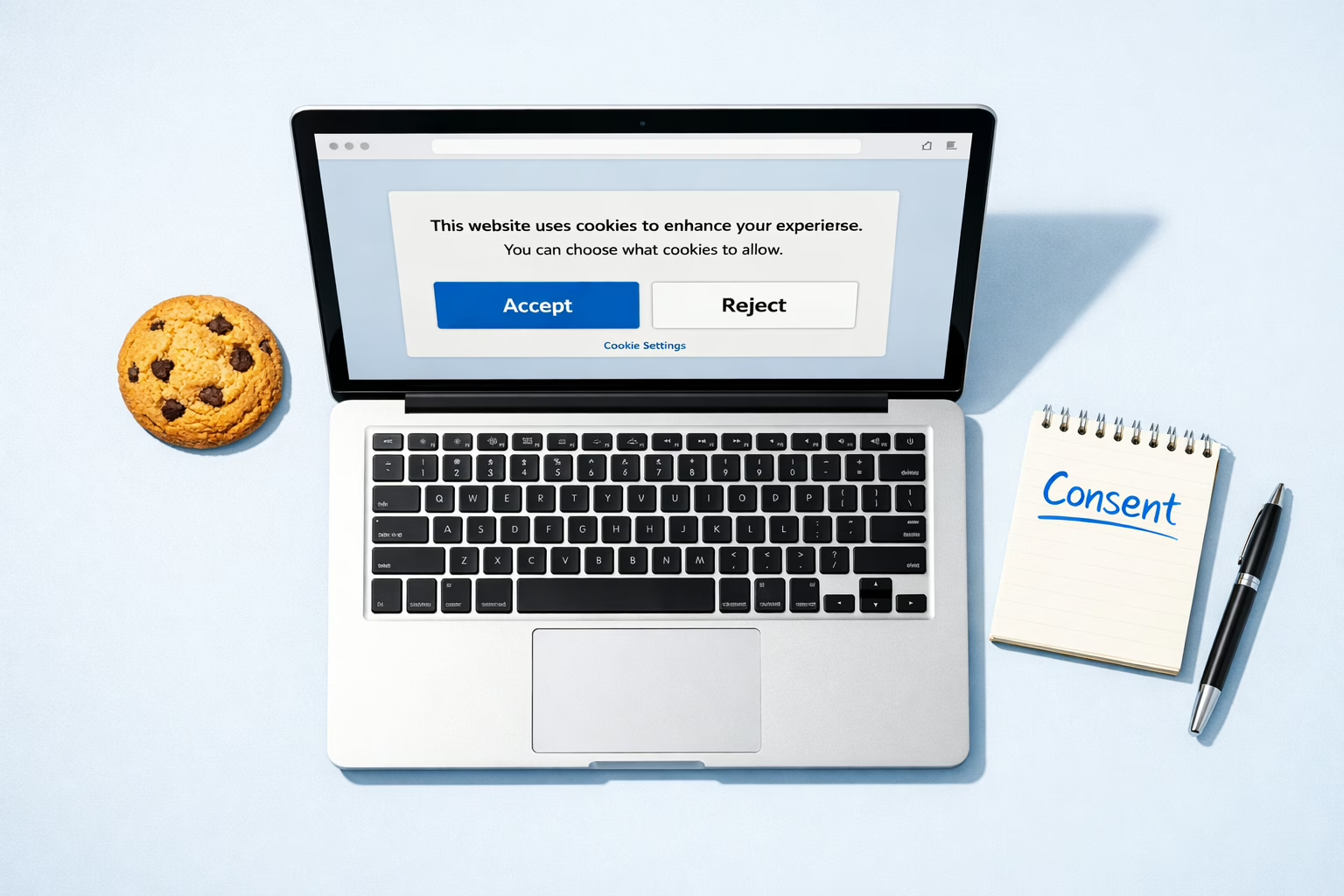
Cookies are a core part of modern web design. They keep your shopping cart items in place, remember your language preference and help websites understand how visitors use their pages. Yet cookies also raise significant privacy concerns. In the United Kingdom, the UK General Data Protection Regulation (UK GDPR) and the Privacy and Electronic Communications Regulations (PECR) govern how organisations can deploy cookies. The forthcoming Data (Use & Access) Act 2025 (DUAA) strengthens these rules, making cookie compliance even more important for small and medium-sized enterprises (SMEs). This guide explains the types of cookies, why consent matters and how to align your practices with the law.
What Are Cookies and Why Do They Matter?
A cookie is a small text file placed on your device when you visit a website. Cookies help sites function properly, remember your preferences and understand how visitors interact with the site. For businesses, cookies enable analytics, personalise content and support targeted advertising. However, they also collect personal information such as IP addresses, device identifiers and browsing behaviour. Because this data can sometimes identify a person, it is subject to data protection laws.
The UK GDPR recognises that cookies involve processing personal data. Under PECR, organisations must obtain consent before storing or accessing information on a user’s device, except where the cookie is strictly necessary for the service requested by the user. Non-essential cookies – including those used for analytics, functionality and marketing – require valid consent. With regulators imposing higher fines and the DUAA raising the bar for accountability, SMEs cannot ignore these obligations.
Categories of Cookies
Understanding the different types of cookies helps you determine which require consent and how to communicate their purpose. The main categories are:
- Strictly Necessary Cookies: These are essential for the website to function, for example for security and load balancing. They do not require user consent but must still be explained in your cookie notice.
- Performance or Analytics Cookies: These cookies collect data about how visitors use your site, such as which pages they visit and how long they stay. Tools like Google Analytics fall into this category. Because they are not essential, you need consent before placing them.
- Functionality Cookies: These remember user preferences and settings, such as language or region. They enhance the user experience but are not strictly necessary, so consent is required.
- Marketing or Advertising Cookies: These track users across websites to display relevant ads and measure campaign performance. They often involve third parties and require explicit consent.
Knowing which cookies you use and why you use them is the first step towards compliance.
Consent Requirements Under UK GDPR
Consent under the UK GDPR must be freely given, specific, informed and unambiguous. Pre-ticked boxes, implied consent or bundling consent with other terms are not allowed. Users must understand what they are agreeing to and should be able to withdraw consent as easily as they give it. Your cookie banner should clearly state the categories of cookies, allow users to accept or reject each type and link to a detailed cookie policy.
Your cookie notice should explain what cookies are, list the cookies used on your site and describe their purpose, expiry and whether they are set by you or a third party. Athlex’s cookie notice outlines plans to provide a full list of cookie names, purposes and expiry dates. It also reminds users that they can manage preferences via the cookie banner or browser settings. Providing this level of detail helps build trust and meets regulatory expectations.
New Rules Under the DUAA 2025
The Data (Use & Access) Act 2025 introduces stricter requirements for cookie consent. The Act clarifies that cookie banners must be clear and separate from other requests. It confirms that pre-ticked boxes and implicit consent are not acceptable and that users must have a genuine choice and be able to withdraw consent as easily as they give it. These rules reinforce existing UK GDPR principles but emphasise enforcement. SMEs should audit their cookie practices now to prepare for these changes.
Third-Party Cookies and Marketing
Many websites rely on third-party services for analytics, advertising or social media integration. Third-party cookies may be set by companies like Google, LinkedIn or Mailchimp. When you use these services, you remain responsible for informing users about the cookies and obtaining consent. You should list each third party in your cookie notice and link to their own privacy or cookie policies. The DUAA’s focus on electronic marketing rules means that organisations that send targeted ads must be especially careful to document and manage cookie consents.
How to Achieve Compliance
- Audit Your Cookies: Identify all cookies used on your site, their purposes and whether they are first- or third-party. Pay special attention to scripts and plugins that may add cookies without your knowledge.
- Update Your Cookie Policy: Ensure your cookie policy is comprehensive and up to date. Use clear language to describe each cookie category and its purpose. Provide information about how users can manage their preferences and withdraw consent.
- Implement a Consent Management Platform: Use a compliant cookie banner that allows users to accept or reject cookies by category. The banner should not obstruct access to strictly necessary services and should not disappear until the user makes a choice.
- Record Consent: Keep records of user consent, including time stamps and the version of your cookie policy in place at the time. This documentation is essential if regulators investigate your practices.
- Review Third-Party Services: Check that your third-party providers also comply with the UK GDPR and DUAA. You may need to update contracts to ensure they assist with consent management and honour users’ choices.
- Monitor Changes: Cookie laws evolve. Follow updates from the Information Commissioner’s Office and review your cookie practices regularly. The DUAA is being rolled out in stages, so more guidance is expected in the coming months.
Benefits of Compliance
Beyond avoiding fines, strong cookie compliance improves user trust. Transparent communication about how you use data shows that you respect privacy. It can also improve the quality of your analytics because users who knowingly opt in are more engaged. Finally, compliance helps future-proof your business as regulators around the world tighten privacy rules.
Conclusion
Cookies are powerful tools that enhance websites but must be used responsibly. For SMEs, the combination of UK GDPR, PECR and the upcoming DUAA 2025 means that cookie compliance is no longer just a technical issue – it is a strategic imperative. By auditing your cookies, updating your policies, obtaining valid consent and keeping clear records, you can meet regulatory requirements and build lasting customer trust. Now is the time to get your cookie house in order before the new rules take effect.
