

Live Facial Recognition & Privacy in the UK | Athlex Blog
Need help navigating biometric data and GDPR? Contact us at hello@athlex.co.uk
This week, the Guardian and Liberty Investigates revealed that UK police forces have sharply expanded their use of live facial recognition (LFR) cameras, scanning nearly 4.7 million faces in 2024, more than double the previous year, with deployments increasing dramatically.
A Sky News–style update also confirms deployment by the Met and South Wales, raising concerns about a surveillance “Wild West” libertyhumanrights.org.uk.
What Is Live Facial Recognition?
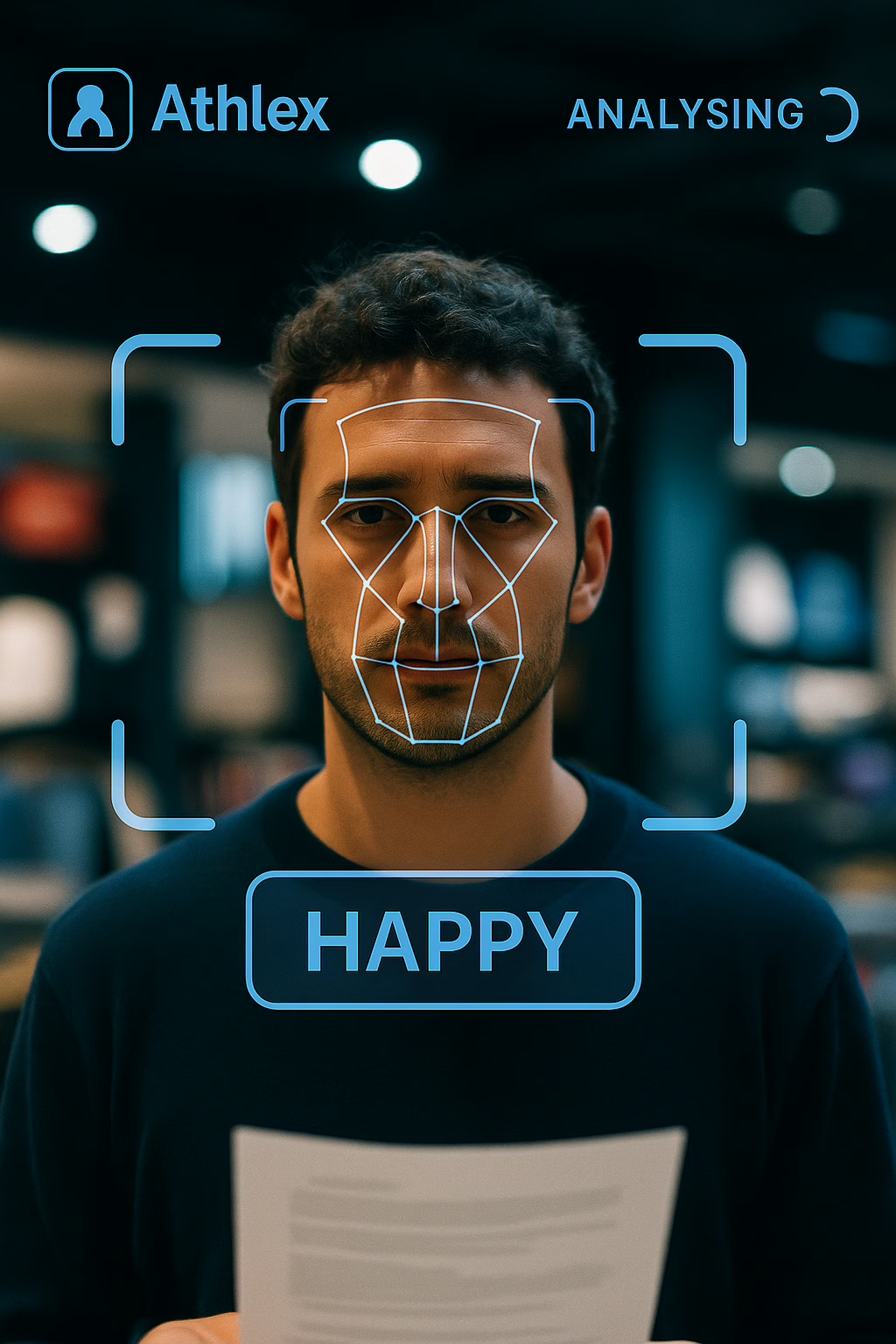
LFR uses real-time camera footage to scan faces in public places—comparing them with watchlists like those of wanted or missing individuals—unlike CCTV, which only records footage for later review.
Thinking of using facial recognition in your workplace or premises? You’ll need to ensure you’re complying with UK GDPR. Contact us for guidance.
What Did the Coverage Reveal?
According to the Guardian:
- Nearly 5 million facial scans were carried out by police in 2024, up from 2.3 million in 2023thesun.co.uk+13theguardian.com+13theguardian.com+13.
- Deployments included mobile LFR vans across multiple forces and permanent cameras in Croydon, with expansion plans underway.
- There’s no dedicated facial recognition legislation in place, despite rapid rollout.
What CivilLiberties Groups Are Saying
Liberty, Big Brother Watch, Privacy International, ARTICLE 19, and others warn this week that LFR:
- Treats the public “as potential suspects” and facilitates functioncreep, potentially making mass
- May intensify misidentification of people of colour, women, and young people, replicating past discriminatory outcomes
- Is being deployed without Parliamentary oversight or judicial review, weakening democratic accountabilitytheguardian.com.
Legal and Privacy Concerns
- Sensitive Biometric Data: LFR uses special category data under UK GDPR, demanding a strong legal basis (e.g., public interest + necessity).
- Transparency Gaps: Without clear rules on watchlists, retention limits, and audibility, these programs lack needed oversight.
- Bias in Outcomes: Studies show misidentification disproportionately affects marginalized groups—echoing warnings in Bridges v South Wales Police (2020).
Worried your use of facial recognition could be noncompliant or unfair? Contact us to review your processes under UK GDPR.
What Businesses & Organisations Should Do
If you use, plan to use, or even monitor facial recognition (retail, events, access control), you must:
- Conduct a Data Protection Impact Assessment (DPIA).
- Clearly document your lawful basis under GDPR.
- Publish transparent privacy notices and allow people to opt out.
- Be mindful not to mirror public sector surveillance practices unlawfully.
Need help with a biometric DPIA or compliance review? Contact us at hello@athlex.co.uk.
Final Thoughts
Live facial recognition isn’t futuristic—it’s here, expanding fast. Yet public support doesn’t equal legal license. The explosive growth this week shows just how urgent it is to get compliance—and public trust—right.
At Athlex, we help businesses and public bodies strike that balance: innovation aligned with rights. To explore how that applies to you, contact us today.
Contact us for expert advice on biometric data, GDPR, and privacy compliance: hello@nzr.2e7.myftpupload.com.co.uk.
Latest on live facial recognition?
UK must toughen regulation of facial recognition, say AI experts
May 29, 2025
Extra reads
Back to blogs
External DPO Services: When to Outsource Your Data Protection Officer
Outsourcing your Data Protection Officer can give your business independent advice, specialist GDPR expertise and practical support without hiring a full-time internal role. Here is when external DPO services may be the right fit.

GDPR Training for UK Businesses: What Staff Really Need to Know
Staff are often the first line of defence in data protection. This article explains what GDPR training for UK businesses should cover, why it matters, and how to make it practical, clear and relevant to everyday work.
