

Category: Uncategorized
Why Outsourced Data Protection Officers Are Essential for UK SMEs in 2025

As data breaches and privacy scandals continue to make headlines, small and medium‑sized enterprises (SMEs) in the United Kingdom must take data protection seriously. By 2025, enforcement of the UK General Data Protection Regulation (UK GDPR) and other privacy laws has intensified. Regulators expect even smaller businesses to demonstrate compliance and accountability. For many SMEs, appointing an in‑house Data Protection Officer (DPO) is neither affordable nor practical. Outsourcing this role to an expert provider offers a flexible and cost‑effective way to meet legal obligations and build trust with customers and partners.
Understanding the Data Protection Officer Role
A DPO is responsible for monitoring internal compliance, providing advice on data protection obligations and acting as a point of contact with supervisory authorities. Some organisations are legally required to appoint a DPO, for example when they process large amounts of personal data, monitor individuals on a large scale or handle special category data. Even when not legally mandated, having a DPO helps to reduce risk and demonstrate accountability, which can be crucial when bidding for contracts or negotiating with investors. SMEs often lack the resources or expertise to fulfil this role internally, making outsourcing a smart option.
Challenges of an In‑House DPO
Hiring a qualified DPO in‑house involves more than just recruiting a new employee. Businesses must account for salary, benefits, ongoing training and the time required for the DPO to stay abreast of changing laws and guidance. In smaller organisations, a single person may not have the time or breadth of experience to manage all aspects of data protection, especially if they are juggling other responsibilities. Turnover is another risk: replacing a DPO can leave gaps in compliance. Outsourcing the role alleviates these issues by giving businesses access to a team of specialists without the overhead of employment.
Benefits of Outsourcing
Outsourcing a DPO gives SMEs access to experienced professionals who have worked across many industries and understand the nuances of privacy law. These providers offer tailored packages, so businesses pay only for the level of support they need. For example, a start‑up might choose a light‑touch plan that includes basic policy reviews and email guidance, while a larger organisation could opt for more hours, on‑site audits and breach response support. Outsourcing providers scale their services as the client grows, ensuring continuity and consistency. Another advantage is independence: an external DPO has no conflicts of interest and can provide objective advice, which is especially important when assessing internal practices.
Cost Efficiency and Flexibility
For SMEs, budget constraints are always a concern. Outsourced DPO services spread costs over a subscription rather than a full‑time salary. Providers typically offer different levels of service, so even micro‑businesses can afford basic compliance support. As your data protection needs evolve, you can upgrade or downgrade your package without the administrative hassle of hiring or letting go of staff. If a significant project arises—such as launching a new product that involves personal data or responding to a complex breach—outsourced teams often have the bandwidth to allocate additional resources quickly.
Expertise and Industry Insight
Professional DPO providers stay up to date with legislative changes, enforcement trends and industry best practices. They often have experience across multiple sectors, from finance and healthcare to retail and tech. This cross‑industry exposure allows them to share insights and strategies that might not be obvious within a single organisation. For example, they may help you implement privacy by design in a new app, drawing on lessons learned from other clients. They can also advise on emerging technologies like artificial intelligence or biometrics, ensuring that innovation does not outpace compliance.
Enhancing Customer Trust
Consumers are increasingly aware of how their data is used. Businesses that can demonstrate robust data protection practices stand out from competitors. An outsourced DPO helps build that trust by ensuring that privacy notices are clear, consent mechanisms are valid and data subject rights are respected. When a customer asks for their data to be deleted or a supplier requires proof of compliance, having an expert handle those processes shows professionalism and respect for privacy. Publicly appointing a DPO can also satisfy partners and investors who demand transparency and accountability.
Integrating Data Protection into Business Strategy
Outsourced DPO services do more than tick compliance boxes. They help embed data protection into your business strategy. This might involve conducting regular audits, training staff or advising on marketing campaigns to ensure that they align with the legal basis for processing personal data. Providers can help create a culture of privacy that empowers employees to recognise and mitigate risks. In sectors like healthcare or financial services, this kind of integrated approach is not optional; it is a competitive necessity.
Choosing the Right Provider
Not all outsourced DPO services are created equal. When selecting a provider, consider their qualifications, sector experience and approach to customer service. Look for a provider who offers clear, upfront pricing and flexibility. They should be willing to tailor their support to your specific needs, whether that’s a one‑off project or ongoing oversight. Ask about response times for queries and breach support, as rapid action is critical when dealing with personal data incidents. References or case studies can provide insight into how they handle similar businesses.
Conclusion
In the evolving data protection landscape of 2025, SMEs cannot afford to treat compliance as an afterthought. An outsourced Data Protection Officer offers a practical solution by delivering expertise, flexibility and cost efficiency. With support from a trusted partner, small and medium‑sized businesses can focus on growth, knowing that their data protection responsibilities are in capable hands. By investing in professional DPO services, you safeguard your reputation, build customer trust and position your business for long‑term success.
Understanding Data Protection Impact Assessments: A Guide for Start‑ups and Growing Businesses

For start‑ups and rapidly expanding companies, the excitement of launching new products or services often overshadows the need to assess how those initiatives might affect personal data. Yet regulators increasingly expect organisations to conduct Data Protection Impact Assessments (DPIAs) whenever projects pose a high risk to individual privacy. A thorough DPIA identifies risks and helps demonstrate accountability under the UK GDPR. This guide explains what DPIAs are, when you need them and how they can benefit your business.
What Is a DPIA?
A Data Protection Impact Assessment is a structured process that helps organisations anticipate and mitigate privacy risks. It assesses how personal data will be collected, used, stored and shared, and evaluates whether proposed safeguards are proportionate. DPIAs are not just paperwork; they are a tool to ensure that data protection principles such as minimisation, purpose limitation and transparency are baked into your projects from the outset. By carrying out a DPIA, you show regulators, customers and partners that you take privacy seriously.
When Is a DPIA Required?
Under the UK GDPR, organisations must conduct a DPIA whenever processing is “likely to result in a high risk to the rights and freedoms of natural persons.” While this phrase might seem broad, the Information Commissioner’s Office (ICO) provides guidance on situations that typically trigger a DPIA. Examples include large‑scale processing of sensitive data (such as health or biometric data), systematic monitoring of public spaces, profiling that has a significant effect on individuals, or combining datasets in ways that could reveal new insights about individuals. Start‑ups developing innovative products—like mobile apps that track location or wearable devices that monitor health—often fall into this category.
Step‑by‑Step DPIA Process
Conducting a DPIA involves several stages. First, you should describe the project, outlining its purpose and the personal data involved. Next, assess whether the processing is necessary and proportionate to achieve your aims; could you minimise data collection or pseudonymise information to reduce risk? Third, identify and analyse potential risks to individuals, such as unauthorised access, inaccurate data or discriminatory profiling. Then plan measures to address each risk, which might include technical controls (encryption, access restrictions), organisational controls (staff training, clear policies) and contractual measures (agreements with suppliers). Finally, document the process and, where required, consult with the ICO or other stakeholders.
Benefits Beyond Compliance
While DPIAs are a legal requirement in many cases, they also offer strategic benefits. By systematically identifying risks, you can avoid expensive mistakes and build trust with customers. DPIAs help ensure that your products or services respect privacy by design, which can be a competitive advantage. Investors and partners often look for evidence of robust data protection practices, and a well‑documented DPIA demonstrates that you understand your responsibilities. Additionally, DPIAs can uncover opportunities to improve processes, such as automating deletion of old data or simplifying user consent flows.
Common Mistakes and How to Avoid Them
One common mistake is treating the DPIA as a one‑off exercise. Data protection risks evolve over time, especially as a product scales or pivots. You should revisit the assessment when you add new features, expand to new markets or work with additional vendors. Another error is failing to involve the right people; DPIAs should include input from technical teams, legal advisors, and, where possible, stakeholders who represent the interests of affected individuals. A superficial assessment that only looks at high‑level risks will not satisfy regulators or provide meaningful insight. Investing time in a thorough process is worthwhile.
The Role of External Support
For many start‑ups, the biggest challenge is knowing where to begin. Regulations can be complex, and internal teams may lack the expertise or bandwidth to conduct a DPIA properly. Engaging an external consultant or outsourcing part of the process can make a significant difference. Specialists help you identify relevant risks, propose effective controls and document your assessment in a way that satisfies regulators. They also bring experience from other sectors, which can provide fresh ideas and prevent common pitfalls. Working with professionals ensures that your DPIA is comprehensive and aligned with best practices.
Integrating DPIAs into Business Culture
For data protection to be effective, it must be part of your company’s culture. Incorporating DPIAs into your project management framework ensures that privacy considerations are addressed from the start rather than as an afterthought. Encourage teams to raise privacy concerns early and provide training on how to conduct basic assessments. Management should lead by example, emphasising that privacy is integral to innovation. When privacy becomes a shared responsibility rather than the domain of a single compliance officer, the quality of your products and services improves.
Conclusion
In a world where data drives innovation, ignoring privacy risks is not an option. Data Protection Impact Assessments are more than a regulatory tick box; they are a roadmap for responsible business growth. By conducting DPIAs for new projects and revisiting them regularly, start‑ups and growing businesses can identify and mitigate risks, build customer trust and avoid costly regulatory fines. Whether you handle special category data, launch new apps or collect customer information at scale, taking the time to complete a thorough DPIA shows that you value the people behind the data.
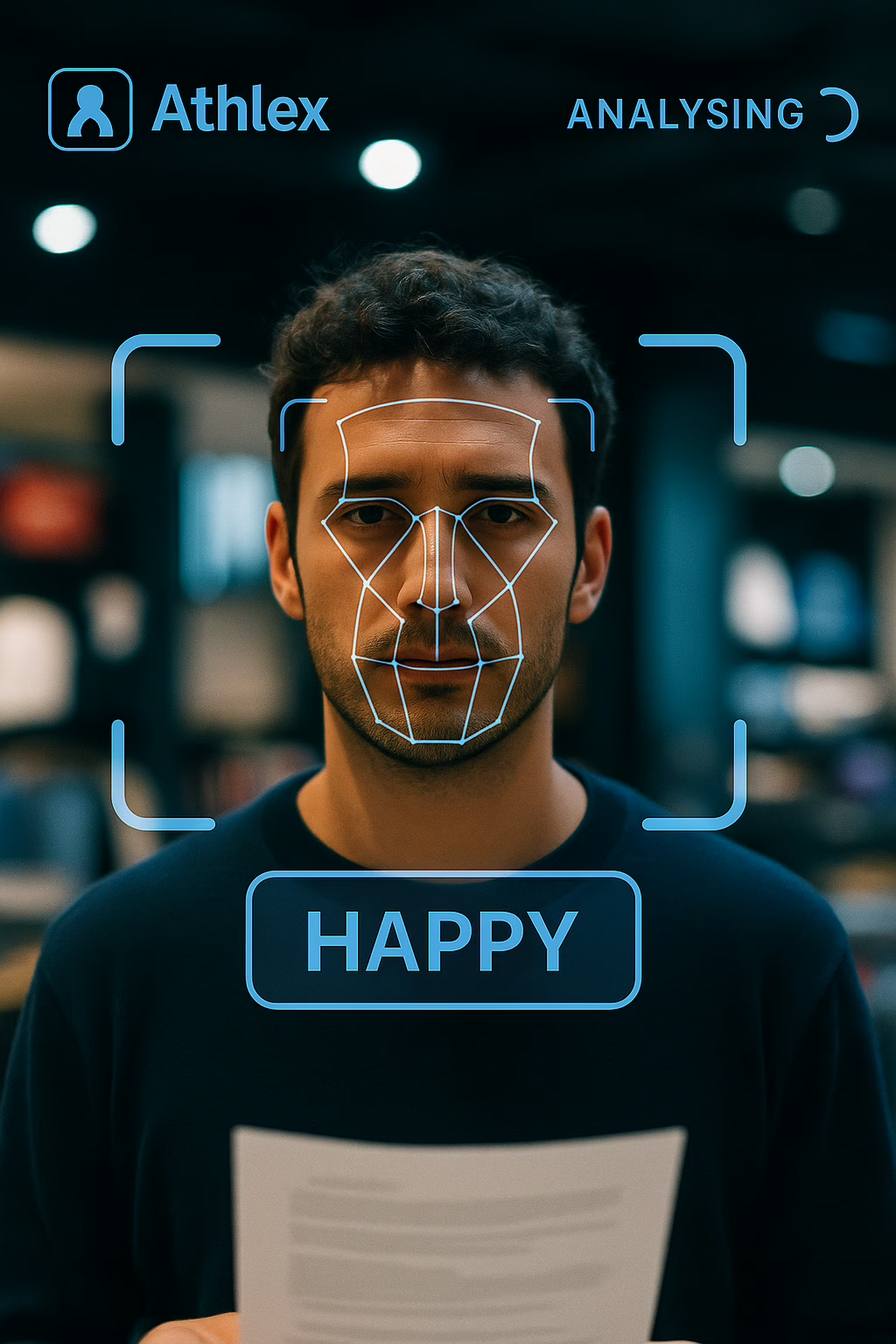
Need help navigating biometric data and GDPR? Contact us at hello@athlex.co.uk
This week, the Guardian and Liberty Investigates revealed that UK police forces have sharply expanded their use of live facial recognition (LFR) cameras, scanning nearly 4.7 million faces in 2024, more than double the previous year, with deployments increasing dramatically.
A Sky News–style update also confirms deployment by the Met and South Wales, raising concerns about a surveillance “Wild West” libertyhumanrights.org.uk.
What Is Live Facial Recognition?
LFR uses real-time camera footage to scan faces in public places—comparing them with watchlists like those of wanted or missing individuals—unlike CCTV, which only records footage for later review.
Thinking of using facial recognition in your workplace or premises? You’ll need to ensure you’re complying with UK GDPR. Contact us for guidance.
What Did the Coverage Reveal?
According to the Guardian:
- Nearly 5 million facial scans were carried out by police in 2024, up from 2.3 million in 2023thesun.co.uk+13theguardian.com+13theguardian.com+13.
- Deployments included mobile LFR vans across multiple forces and permanent cameras in Croydon, with expansion plans underway.
- There’s no dedicated facial recognition legislation in place, despite rapid rollout.
What CivilLiberties Groups Are Saying
Liberty, Big Brother Watch, Privacy International, ARTICLE 19, and others warn this week that LFR:
- Treats the public “as potential suspects” and facilitates functioncreep, potentially making mass
- May intensify misidentification of people of colour, women, and young people, replicating past discriminatory outcomes
- Is being deployed without Parliamentary oversight or judicial review, weakening democratic accountabilitytheguardian.com.
Legal and Privacy Concerns
- Sensitive Biometric Data: LFR uses special category data under UK GDPR, demanding a strong legal basis (e.g., public interest + necessity).
- Transparency Gaps: Without clear rules on watchlists, retention limits, and audibility, these programs lack needed oversight.
- Bias in Outcomes: Studies show misidentification disproportionately affects marginalized groups—echoing warnings in Bridges v South Wales Police (2020).
Worried your use of facial recognition could be noncompliant or unfair? Contact us to review your processes under UK GDPR.
What Businesses & Organisations Should Do
If you use, plan to use, or even monitor facial recognition (retail, events, access control), you must:
- Conduct a Data Protection Impact Assessment (DPIA).
- Clearly document your lawful basis under GDPR.
- Publish transparent privacy notices and allow people to opt out.
- Be mindful not to mirror public sector surveillance practices unlawfully.
Need help with a biometric DPIA or compliance review? Contact us at hello@athlex.co.uk.
Final Thoughts
Live facial recognition isn’t futuristic—it’s here, expanding fast. Yet public support doesn’t equal legal license. The explosive growth this week shows just how urgent it is to get compliance—and public trust—right.
At Athlex, we help businesses and public bodies strike that balance: innovation aligned with rights. To explore how that applies to you, contact us today.
Contact us for expert advice on biometric data, GDPR, and privacy compliance: hello@nzr.2e7.myftpupload.com.co.uk.
Latest on live facial recognition?
UK must toughen regulation of facial recognition, say AI experts
May 29, 2025

Need help navigating biometric data and GDPR? Contact us at hello@athlex.co.uk
Recent enforcement by the ICO shows that valid consent isn’t optional — it’s essential. In April 2025, a company was slapped with a £90,000 fine for making 95,000+ marketing calls to people on the Telephone Preference Service without valid consent. They couldn’t even prove they’d asked — a clear breach of UK GDPR.
New legal changes — what you need to know
On 19 June 2025, the Data (Use and Access) Act 2025 (DUAA) received Royal Assent. This updates key parts of UK GDPR and PECR by:
- Raising maximum fines (up to £17.5m or 4% global turnover) for electronic marketing
- Introducing new rules around cookie consent, subject access requests, and automated decisions
- Expanding the ICO’s powers to compel reports and interviews when needed
These changes reinforce that consent must be clear, recorded, and verifiable.
Why this matters to your business
- Reputation: A fine or public enforcement can seriously hurt trust
- Customer relations: Being transparent builds loyalty
- Peace of mind: Clear consent means clear marketing
But many businesses find this complicated. That’s where Athlex comes in.
How Athlex Helps — Simply and Clearly
We’ve designed our support with your needs in mind — straightforward, effective, and jargon-free.
Marketing Compliance Packages
- Clear, compliant consent wording
- Reliable record-keeping systems
- Seamless integration into your campaigns
One-off Consultancy
- A no-nonsense audit of current processes
- Plain-English recommendations
- Practical fixes with no long contracts
DPO Services
- Ongoing expert oversight
- Support with consent, DPIAs, training, and ICO contact
- Confidence that everything’s above board
What You Can Do Now
- Check your consent wording — is it specific and unambiguous?
- Make sure you record it — including time, method, and wording
- Update your processes to reflect the DUAA’s new rules
- Consider using a DPO — proactive compliance beats reactive fixes
Learn More
- ICO overview of the Data (Use and Access) Act — ideal for understanding changes to consent, cookies, and ICO powers.
- Technology Law Dispatch: “UK Enacts Data Use and Access Act 2025” — a helpful breakdown of enforcement updates and new fines tiers.bdo.co.uk+5technologylawdispatch.com+5ico.org.uk+5
Don’t Leave It to Chance
Recent fines show the cost of getting consent wrong. At Athlex, we make compliance simple, clear, and stress-free — from one-off help to ongoing DPO support.
Get in touch today to discuss the best fit for your business.

Why GDPR Compliance Matters
The General Data Protection Regulation (GDPR) isn’t just a legal requirement—it’s a framework that helps build trust with your customers. Non-compliance can result in heavy fines and a damaged reputation.
Tip 1: Know What Data You Collect
Understanding exactly what personal data you’re collecting is the first step to compliance. This includes obvious data like names and emails, but also IP addresses, location data, and more.
- Map your data flows
- Audit third-party tools
- Review data collection forms
Tip 2: Get Clear Consent
Consent must be freely given, specific, informed, and unambiguous. Pre-ticked boxes or vague opt-ins are no longer acceptable. Make sure your users know exactly what they’re agreeing to.
- Use plain language
- Separate consent from terms
- Offer granular options (e.g., marketing vs analytics)
Tip 3: Prepare for Data Requests
Under GDPR, users have the right to access, correct, or delete their data. Your team should be trained to respond to these requests within 30 days.
- Create a response protocol
- Set up a user-friendly request form
- Keep a log of all requests and resolutions
Bonus Tip: Train Your Team
Even the best policies fail without team awareness. Regular training ensures your employees understand the importance of data privacy.
Need Help Staying Compliant?
Our team at Athlex offers audits, policy reviews, and hands-on GDPR support tailored to your business.
